

Storm Damage and Your Roof: A North Texas Homeowner's Guide
Storm Damage and Your Roof:
A North Texas Homeowner's Guide
You've got a full plate. Work, kids, bills, life. The last thing you need is a mystery leak or a fight with your insurance company. But North Texas storms don't care about your schedule. One afternoon the sky is clear over Prosper or McKinney, and by evening a hailstorm has stripped your shingles and the wind has torn back a piece of flashing you won't notice until the next hard rain finds it.
Here's the truth: most homeowners don't lose money to the storm itself. They lose money in the gap between “the storm happened” and “the damage gets fixed,” usually because nobody explained what to do next. That's what this guide is for. No jargon, no runaround. Just what you actually need to know.
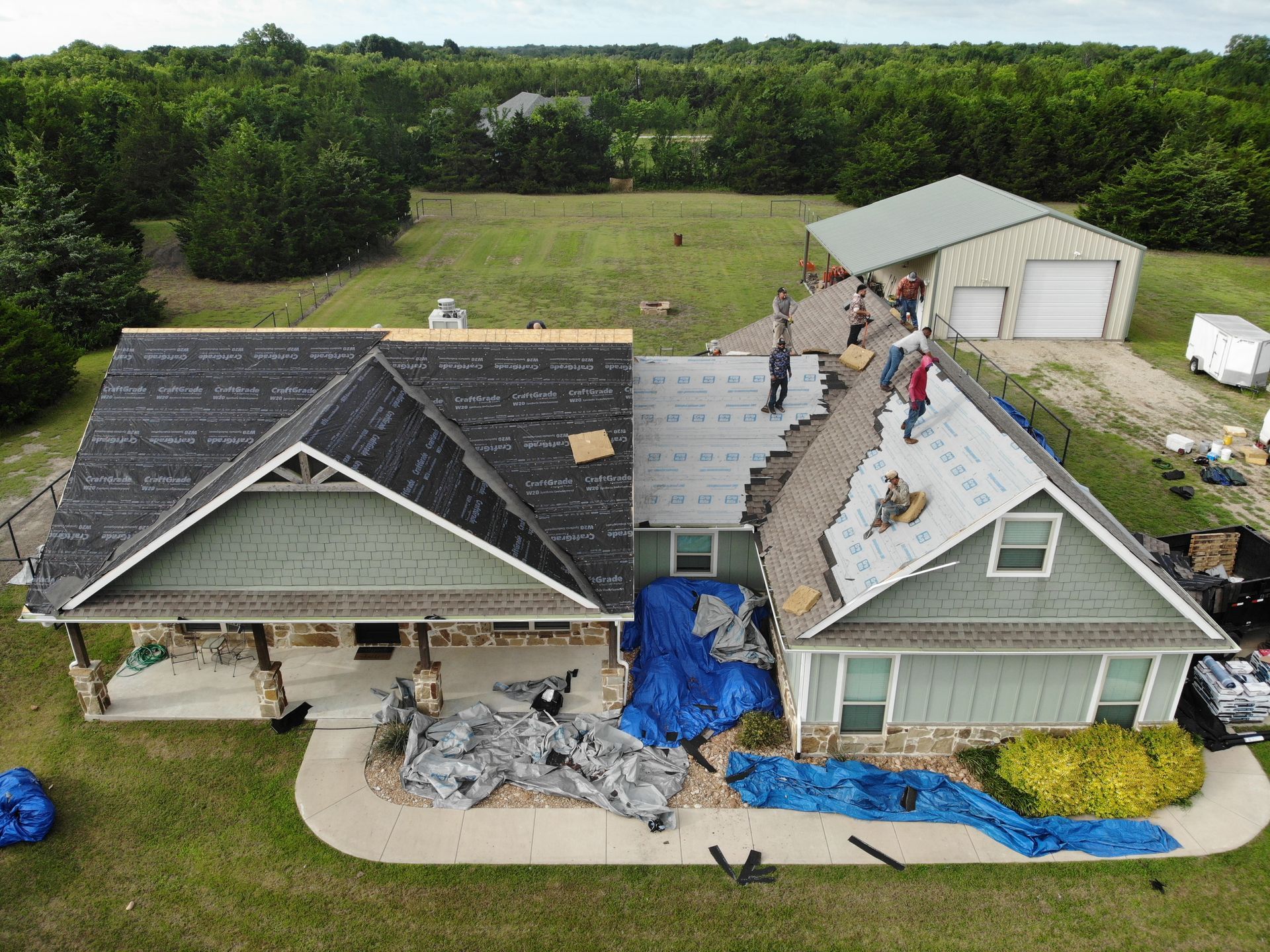
Common Mistakes: 5 Ways Homeowners Lose Money After a Storm
Myth: “My insurance company will automatically catch all the damage.”
Adjusters move fast during storm season and cover a lot of roofs in a single day. Without someone on your side checking every angle, hidden damage like soft decking, loose flashing, or granule loss often gets missed or written off as “cosmetic.”
Myth: “Any contractor can handle my claim.”
Roofing and insurance claims are two different jobs. A crew that's great at installing shingles may have zero experience negotiating with an adjuster. That usually means you settle for whatever the first estimate says, even if it's too low.
Myth: “I have to pay out of pocket before insurance pays me back.”
With a reputable contractor working your claim, you typically pay nothing until the repair is approved and covered.
Myth: “A small leak can wait.”
Small leaks after a hail or wind event rarely stay small. Trapped moisture causes mold and structural damage long before you ever see a stain on your ceiling.
Myth: “I have to use my insurance company's preferred contractor.”
You have the legal right to choose your own contractor. “Preferred” usually means preferred by the insurance company's bottom line, not yours.
Step by Step: What Actually Happens During a Storm Damage Claim
● Inspect. We do a thorough, no obligation inspection of your entire property, not just the roof, and document every point of damage with photos and video.
● Document. Every finding goes into a clear report so you know exactly what's damaged and why it matters.
● Educate. Before anything gets filed, you should understand your policy, your options, and what happens next, explained in plain English, not insurance jargon.
● File and advocate. We file the claim and meet your adjuster on site to walk the damage together, pushing back on any assessment that falls short.
● Build. Once your claim is approved, we repair or replace your roof using quality materials and real craftsmanship, not the cheapest fix that barely passes inspection.
● Legacy. A reputable roofer stands behind the work with a real warranty, long after the crew has packed up and gone home.
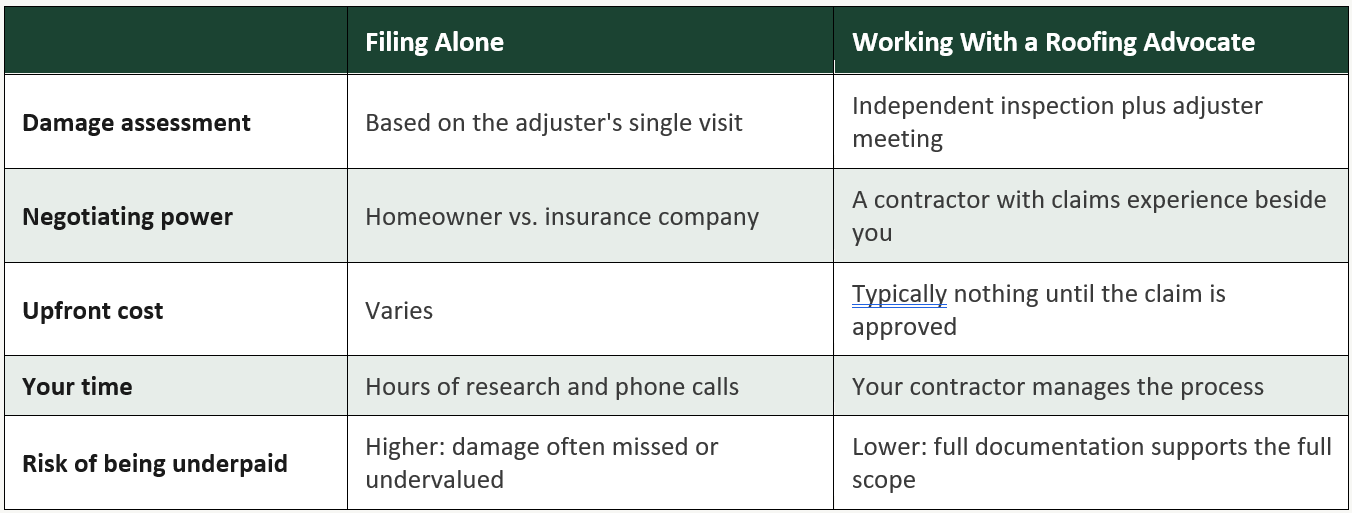
Comparison: Filing a Claim Alone vs. With a Roofing Advocate
This is paragraph text. Click it or hit the Manage Text button to change the font, color, size, format, and more. To set up site-wide paragraph and title styles, go to Site Theme.
Do's and Don'ts After Storm Damage
Do:
● Photograph visible damage from the ground right away, for your own records
● Book a professional inspection within days of the storm, not weeks
● Keep every document, photo, and message tied to your claim in one folder
● Ask questions until you actually understand your coverage, not just its limits
Don't:
● Climb onto your roof to inspect it yourself
● Sign a contract before you understand the full scope of repairs
● Accept the first insurance estimate without a second opinion
● Wait out a "small" leak. Trapped moisture doesn't fix itself
The Framework: Gladiator's 5 Pillar Process
Every homeowner we work with moves through the same five pillars, in the same order, every time.
I: Inspect. A careful, no obligation review of your roof and property.
E: Educate. A clear explanation of what we found and what happens next.
A: Advocate. We stand beside you at the adjuster meeting.
B: Build. Quality materials, strict standards, real craftsmanship.
L: Legacy. Warranties we honor and relationships that outlast the job.
It's a simple process, but skipping any one of these steps is usually how homeowners end up underpaid, confused, or stuck with a roof that won't hold up to the next storm.
Quick Tips: Protecting Your Roof Between Storms
● Walk your property twice a year and check for granules collecting near your downspouts. That's an early sign of shingle wear.
● Trim back overhanging branches before storm season to cut down on impact and debris damage.
● Check your attic insulation and ventilation once a year. Poor airflow shortens your roof's life even without a storm.
● Take dated photos of your roof each spring. They become valuable evidence if you ever need to file a claim.
● Know your insurance policy's deadline for reporting storm damage before you need it, not after.
The Bottom Line
You've got enough on your plate without wrestling with insurance red tape. Whether it's understanding the process, avoiding the common traps, or just knowing what a fair repair looks like, the right information and the right advocate make the difference between a roof that's patched and a roof that's truly fixed.
If a recent storm has you wondering what's really going on up there, a free, no obligation inspection is the fastest way to find out.